Packages Tour
- Home
- Packages Tour
Manu Wildlife Center Express (4 Days / 3 Nights)
For those short on time but big on adventure.
This compact Amazon safari features close encounters with nature’s most elusive creatures. Discover a thriving ecosystem through trail walks, visit a spectacular macaw clay lick, climb our canopy tower for breathtaking forest views, and experience the Amazon’s best Tapir observation platform. Includes visits to an oxbow lake to spot Giant Otters, monkeys, and abundant birdlife.
- Starts and ends in Puerto Maldonado
- Wildlife highlights: Tapirs, macaws, otters, monkeys
- Departure: Monday
- Duration: 4 Days / 3 Nights
Itinerary
Day 1: Puerto Maldonado-Colorado -Manu Wildlife Center.
Our service begin from 6:00 to 6:30 a.m. with your
reception from your hotel followed with a transfer service by van to Santa Rosa Village, we will get there in about
two-hours and a half journey, you will cross the Inambari river for a 15 minutes boat trip to Puerto Carlos, here you
will start your overland journey to Boca Colorado for 45 minutes by car, followed by four hours and a half motorized
boat journey ride upstream the Madre de Dios river. We arrive to Manu Wildlife Center for lunch.
Later we make our first acquaintance with the rainforest, exploring some of the 30 miles of forest trails that surround
the lodge. We have an excellent chance of encountering some of the 12 species of monkeys, including the Spider
Monkey and Emperor Tamarin, which inhabit the surrounding forest.
After dinner there will be an enchanting night walk along the trails, in search of the nocturnal birds and animals of the rainforest (L, D)
Day 2: Manu Wildlife Center: the Macaw Clay lick project, Canopy Tower & Tapir Clay lic.
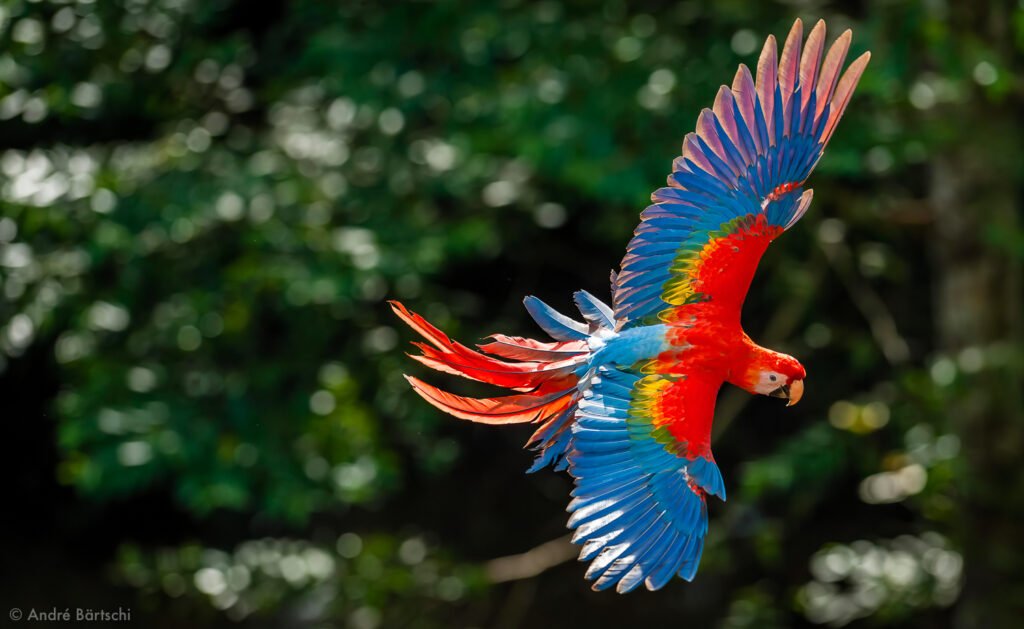
Another early start (inevitable on wildlife expeditions), after a delicious breakfast we walk through the forest for some minutes, where we find the Macaw Lick project. The hide provided with individual chairs and a convenient place for cameras and binoculars to a distance of 15 meters. In groups of two and three the scarlet Macaws come flapping in, landing in the treetops as they eye the main stage below. After this we continue walking and exploring on the network of trails surrounding the lodge then we return to the lodge for lunch.
Later, we continue to explore and discover the rainforest, its lore and plant life, on the network of trails surrounding the lodge, arriving in the late afternoon at our 34m/112ft. Canopy Tower. On its platform we witness the frantic rush-hour activity of twilight in the rainforest canopy, before night closes in. Then we set off along the “collpa trail”, which will take us to the lodge’s famous Tapir Clay lick. Here at the most active tapir lick known in the entire Amazon, our research has identified from 8-12 individual 600-pound Tapirs who come to this lick to eat clay from under the tree roots around the edge. This unlikely snack absorbs and neutralizes toxins in the vegetarian diet of the Tapir, the largest land animal of Latin America. The lick features a roomy, elevated observation platform 5m/17ft above the forest floor. The platform is equipped with freshly made up mattresses with pillows. Each mattress is covered by a roomy mosquito net. The 10-m-long, elevated walkway to the platform is covered with sound-absorbing padding to prevent our footsteps from making noise. This Tapir Experience is unique and exciting because these normally very shy creatures are visible up close, and flash photography is not just permitted, but encouraged. The hard part for modern city dwellers is to remain still and silent anywhere from 30 minutes to two or more hours. Many prefer to nap until the first Tapir arrives, at which point your guide gently awakens you to watch the Tapir 10-20m/33-66ft) away below the platform. Most people feel that the wait is well worth it in order to have such a high probability of
observing the rare and elusive Tapir in its rainforest home. (B/L/D)
Day 3: Manu Wildlife Center: Hike to an Oxbow Lake and the Wildlife Trails.
We set off early for an old oxbow lake full of water lilies (Nuphar lutea) and sunken logs. As we circle the lake on our catamaran we might encounter the resident Giant Otter family on a fishing expedition, or troops of monkeys crashing noisily through the trees. Wattled Jacanas step lightly on the lily pads, dainty Sun Grebes paddle across the water, supple-necked Anhinga air-dry their wide, black wings, and perhaps an Osprey scans for fish from a high branch. Among the bushes near the waterline, Hoatzins, which look like rust-colored, punk chickens, announce their presence with distinctive, bizarre wheezing and grunts. Woodpeckers, tanagers, macaws, toucans and parakeets all finally come swooping in to trees surrounding the lake. Many of them roost around the lake for the night.
After lunch at the lodge our guide is available to lead us on freewheeling expeditions in search of further wildlife encounters, or we may take one of the lodge’s many trails on private and personal excursions to commune with the spirits of the rainforest. This evening, from the late afternoon until after Dinner, we offer an opportunity to search for caiman and other nocturnal life along the riverbank by boat (If the level of river allows it) (B/L/D)
Day 4: Manu Wildlife Center to Puerto Maldonado – Departure day.
We leave our lodge very early on the two hour and a half return boat trip downstream to the Colorado Village. Depending upon the time we must be in Puerto Maldonado, the breakfast will be served at the lodge or on the boat while you enjoying early morning wildlife activity as we go, of course this is a perfect time to take advantage of valuable early morning wildlife activity along the river, in additions this journey allows us to see several lowland native settlements and gold miners digging and panning gold along the banks of the Madre de Dios River. We will stop in the far-west type gold-mining town of Colorado to start our overland journey to Puerto Carlos for 45 minutes, then you will cross the Inambari River for 15 minutes boat trip to Santa Rosa, finally a van or bus will drive us in approximately two-hours to the airport in Puerto Maldonado City, with this assistance your jungle adventure ends… (B)
The Newest Manu Adventurer (5 Days / 4 Nights)
A rainforest journey from deep wilderness to rich biodiversity.
Travel by boat and van into the heart of the Manu Biosphere. Begin your stay at Manu Wildlife Center, then venture into Manu National Park for a night at our remote Tented Camp. Explore pristine oxbow lakes, encounter Giant Otters, capybaras, and even jaguars, and end with unforgettable nights at our Tapir and Macaw clay licks.
- From Puerto Maldonado to Cusco
- Wildlife highlights: Jaguars, tapirs, otters, monkeys, macaws
- Departure: Thursday
- Duration: 5 Days / 4 Nights
Itinerary
Day 1: Puerto Maldonado-Colorado -Manu Wildlife Center.
Our service begin from 6:00 to 6:30 a.m. with your
reception from your hotel followed with a transfer service by van to Santa Rosa Village, we will get there in about
two-hours and a half journey, you will cross the Inambari river for a 15 minutes boat trip to Puerto Carlos, here you
will start your overland journey to Boca Colorado for 45 minutes by car, followed by four hours and a half motorized
boat journey ride upstream the Madre de Dios river. We arrive to Manu Wildlife Center for lunch.
Later we make our first acquaintance with the rainforest, exploring some of the 30 miles of forest trails that surround
the lodge. We have an excellent chance of encountering some of the 12 species of monkeys, including the Spider
Monkey and Emperor Tamarin, which inhabit the surrounding forest.
After dinner there will be an enchanting night walk along the trails, in search of the nocturnal birds and animals of the rainforest (L, D)
Day 2: Manu Wildlife Center to Manu National Park (Manu Wildlife Tented Camp).
Another early start (inevitable on wildlife expeditions), after a delicious breakfast we walk through the forest for some minutes, where we find the Macaw Lick project. The hide provided with individual chairs and a convenient place for cameras and binoculars to a distance of 15 meters. In groups of two and three the scarlet Macaws come flapping in, landing in the treetops as they eye the main stage below. After this we continue walking and exploring on the network of trails surrounding the lodge then we return to the lodge for lunch.
Later, we continue to explore and discover the rainforest, its lore and plant life, on the network of trails surrounding the lodge, arriving in the late afternoon at our 34m/112ft. Canopy Tower. On its platform we witness the frantic rush-hour activity of twilight in the rainforest canopy, before night closes in. Then we set off along the “collpa trail”, which will take us to the lodge’s famous Tapir Clay lick. Here at the most active tapir lick known in the entire Amazon, our research has identified from 8-12 individual 600-pound Tapirs who come to this lick to eat clay from under the tree roots around the edge. This unlikely snack absorbs and neutralizes toxins in the vegetarian diet of the Tapir, the largest land animal of Latin America. The lick features a roomy, elevated observation platform 5m/17ft above the forest floor. The platform is equipped with freshly made up mattresses with pillows. Each mattress is covered by a roomy mosquito net. The 10-m-long, elevated walkway to the platform is covered with sound-absorbing padding to prevent our footsteps from making noise. This Tapir Experience is unique and exciting because these normally very shy creatures are visible up close, and flash photography is not just permitted, but encouraged. The hard part for modern city dwellers is to remain still and silent anywhere from 30 minutes to two or more hours. Many prefer to nap until the first Tapir arrives, at which point your guide gently awakens you to watch the Tapir 10-20m/33-66ft) away below the platform. Most people feel that the wait is well worth it in order to have such a high probability of
observing the rare and elusive Tapir in its rainforest home. (B/L/D)
Day 3: Manu National Park (Manu Wildlife Tented Camp): Cocha Salvador & Cocha Otorongo.
We set off early for an old oxbow lake full of water lilies (Nuphar lutea) and sunken logs. As we circle the lake on our catamaran we might encounter the resident Giant Otter family on a fishing expedition, or troops of monkeys crashing noisily through the trees. Wattled Jacanas step lightly on the lily pads, dainty Sun Grebes paddle across the water, supple-necked Anhinga air-dry their wide, black wings, and perhaps an Osprey scans for fish from a high branch. Among the bushes near the waterline, Hoatzins, which look like rust-colored, punk chickens, announce their presence with distinctive, bizarre wheezing and grunts. Woodpeckers, tanagers, macaws, toucans and parakeets all finally come swooping in to trees surrounding the lake. Many of them roost around the lake for the night.
After lunch at the lodge our guide is available to lead us on freewheeling expeditions in search of further wildlife encounters, or we may take one of the lodge’s many trails on private and personal excursions to commune with the spirits of the rainforest. This evening, from the late afternoon until after Dinner, we offer an opportunity to search for caiman and other nocturnal life along the riverbank by boat (If the level of river allows it) (B/L/D)
Day 4: Manu National Park (Manu Wildlife Tented Camp) to Manu Wildlife Center – Macaw Clay Lick Project and Tapir Clay lick.
We leave our lodge very early on the two hour and a half return boat trip downstream to the Colorado Village. Depending upon the time we must be in Puerto Maldonado, the breakfast will be served at the lodge or on the boat while you enjoying early morning wildlife activity as we go, of course this is a perfect time to take advantage of valuable early morning wildlife activity along the river, in additions this journey allows us to see several lowland native settlements and gold miners digging and panning gold along the banks of the Madre de Dios River. We will stop in the far-west type gold-mining town of Colorado to start our overland journey to Puerto Carlos for 45 minutes, then you will cross the Inambari River for 15 minutes boat trip to Santa Rosa, finally a van or bus will drive us in approximately two-hours to the airport in Puerto Maldonado City, with this assistance your jungle adventure ends… (B)
The Bio Trip (6 Days / 5 Nights)
A breathtaking photo safari from Andes to Amazon.
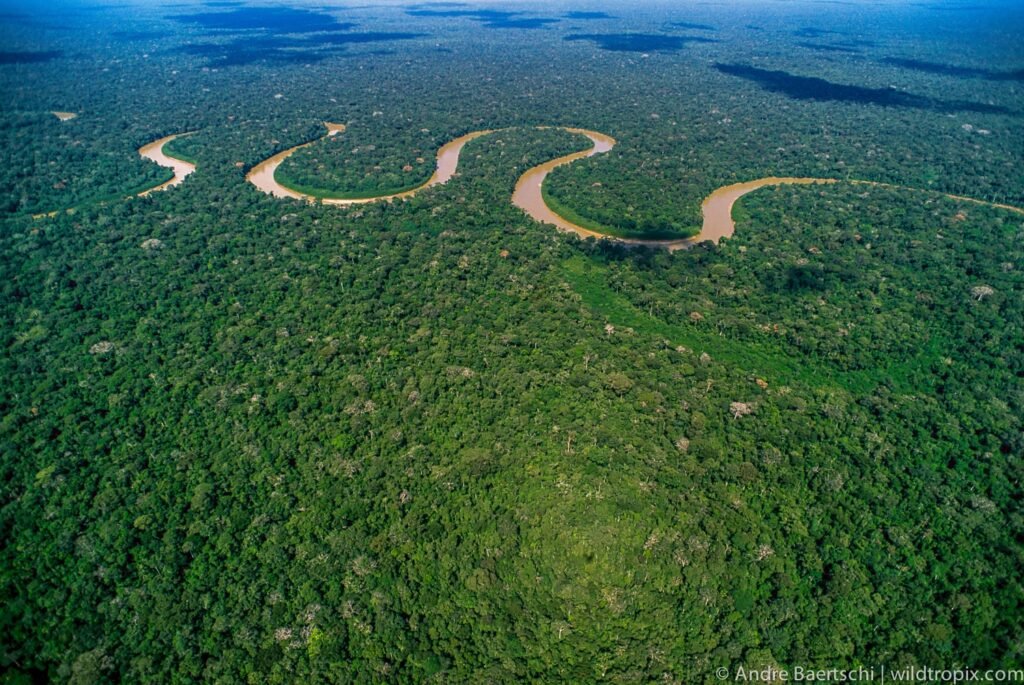
This classic journey begins in the Andes, descends through lush cloud forests, and ends at Manu Wildlife Center. Enjoy birdwatching at Cock-of-the-Rock Lodge, spot monkeys and hummingbirds at Amazonia Lodge, and spend your final days immersed in Amazonian wildlife – from Giant Otters and scarlet macaws to tapirs and caimans.
- From Cusco to Puerto Maldonado
- Wildlife highlights: Cock-of-the-Rock, monkeys, otters, tapirs
- Departure: Saturday
- Duration: 6 Days / 5 Nights
Itinerary
Day 1: Cusco to Cock-of-the-Rock Lodge
Our overland journey begins at 3,400m/11,150 ft, with an early departure from the highland city of Cusco. Today’s destination is the lush cloud forest region where the Andes fall away to the Amazon basin. This is a day of scenic drama and striking contrasts. We first visit a mountain wetland habitat teeming with migrant and local waterfowl, before crossing two mountain ranges between the Cusco valley and the Paucartambo valley, to a maximum altitude of 3,900m/12,790ft. Finally, we follow a sinuous ribbon of highway on its plunge through an extraordinary world of forested cliffs, waterfalls and gorges. We take leisurely stops to see mountain villages, a hilltop necropolis of chullpas (pre-Inca burial chambers), and the abrupt ridge top of Ajanaco, which marks the final high point where the Andes begin their swoop into the Amazon basin. In clear weather we will
see a breathtaking panorama of cloud forest and mountain giving way to the lowland rainforest plains far below us.
After a lunch near here we descend through the startling and rapid environmental transformations characteristic of the tropical Andes, passing from grassland and stunted trees through elfin forest, until we wind through a lush and magical world of overhanging trees, giant ferns, monster begonias, countless orchids and bromeliads, and a diverse and teeming birdlife.
We make frequent spontaneous stops, perhaps spotting a brilliantly feathered quetzal, a trogon, or the wild turkey- like Guan. We reach the comfortable Cock-of the-Rock Lodge in the late afternoon, the best hour to visit the nearby viewing platform for the display ground, or “lek”. This is usually the highlight of a long, full day, a chance to see Peru’s dazzling national bird, the Cock-of-the-Rock (Rupicola peruvianus) in full, raucous courting display. (Box Lunch/D).
Day 2: Cock-of-the-Rock Lodge to Amazonia Lodge or Pantiacolla Lodge
Rising early, we could scout for birds, and perhaps Brown Capuchin or Woolly monkeys along the nearby road. Or we can take a secluded nature walk on a short trail loop to the river and back. After breakfast we continue our drive, as mountains give way to low rolling hills and farmland. At Patria we visit a plantation of coca grown legitimately for the Peruvian coca leaf market. At midday we reach Atalaya, a tiny port where the Piñipiñi River meets the Alto Madre de Dios. Now the lowland rainforest part of our journey begins. Rivers are the highways of the rainforest, and henceforth we will travel in large, comfortable dugout canoes shaded by canopy roofs and driven by powerful outboard motors.
During normal river conditions we arrive at our lodge in time for exploration and wildlife viewing – which may include toucans, kingfishers, a rare endemic hummingbird and a multitude of butterflies — along one of its many forest trails. (B/Box Lunch/D)
Day 3: Amazonia Lodge or Pantiacolla Lodge to Manu Wildlife Center
There is time for another short morning hike on the lodge trails before leaving early for Manu Wildlife Center.
As we follow the broad, rushing course of the Alto Madre de Dios River past the last foothills of the Andes, our ever- changing route offers sightings of new birds — terns, cormorants, White-winged Swallows, and flocks of nighthawks flushed from their daytime lairs by the sound of our engine. Splashes of brilliant yellow, pink and red foliage dot the forest-clad slopes around us, and the breeze is laden with the heady perfumes of the tropical forest. We pass the mouth of the Manu River, the gateway to the Manu National Park. We pause during our journey to stretch our legs and visit Boca Manu, the village a short way downriver.
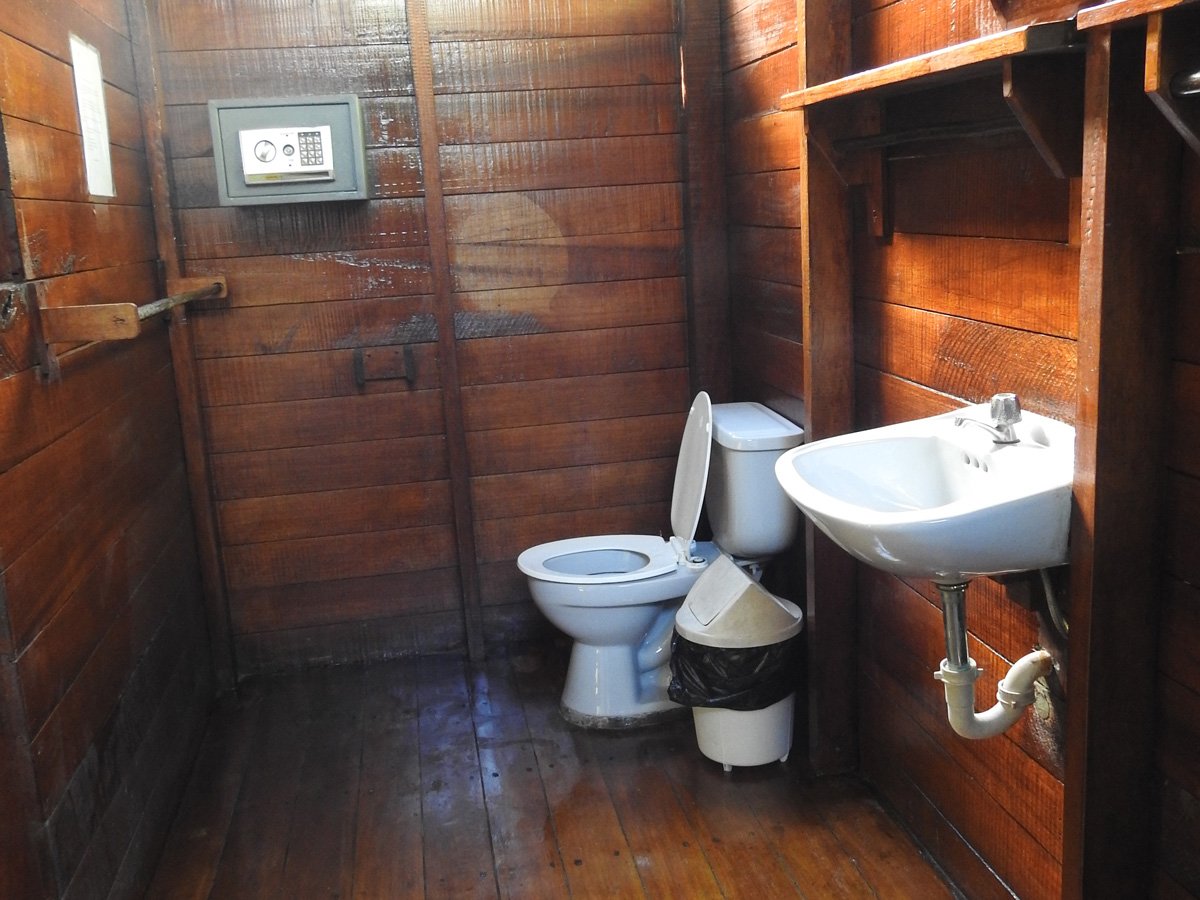
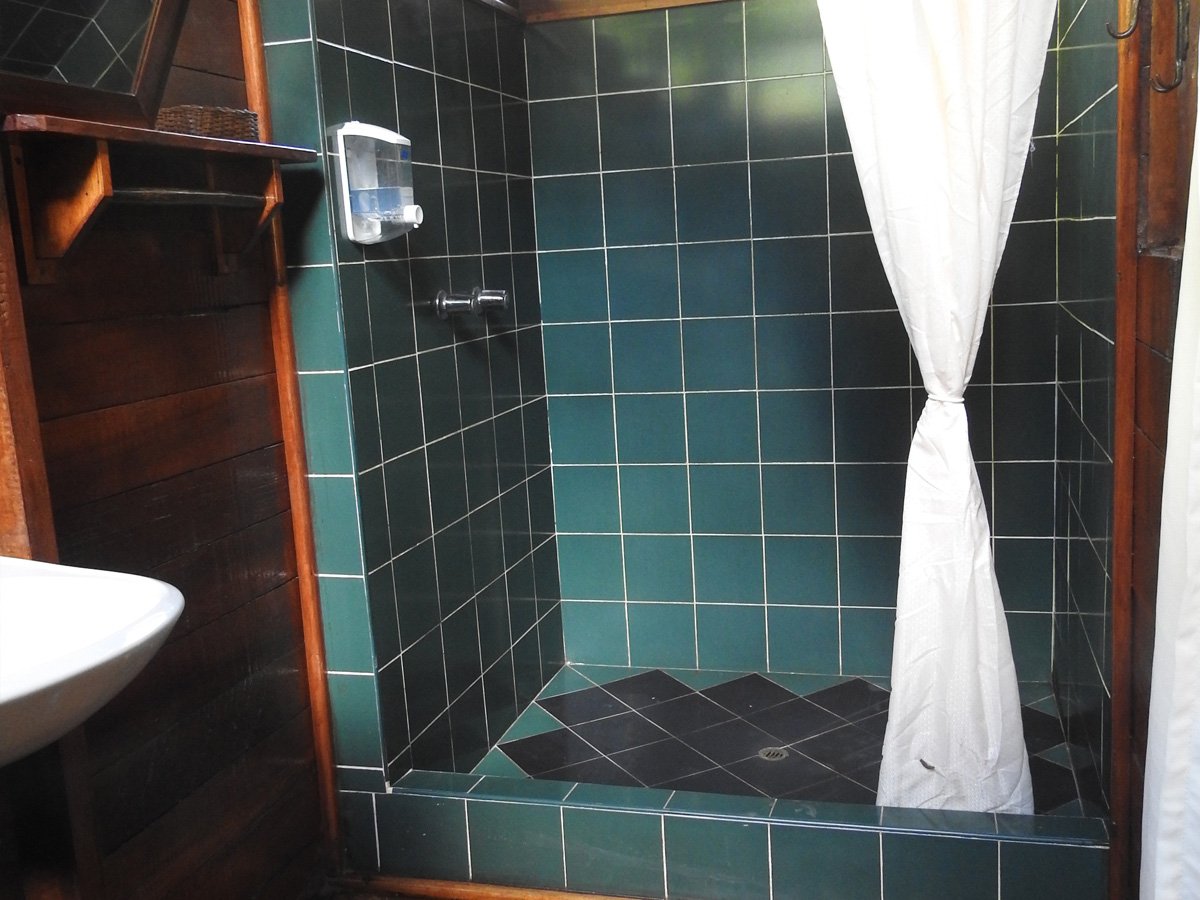
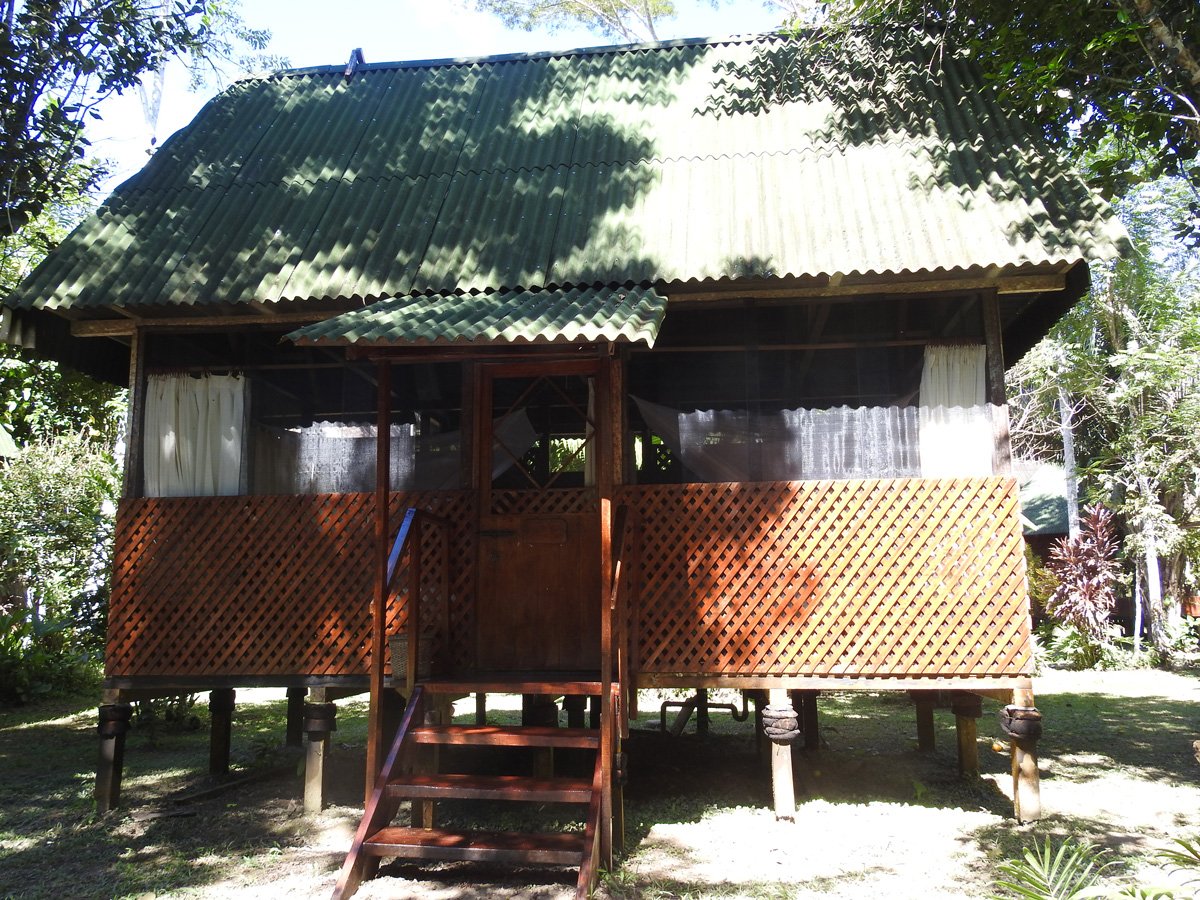
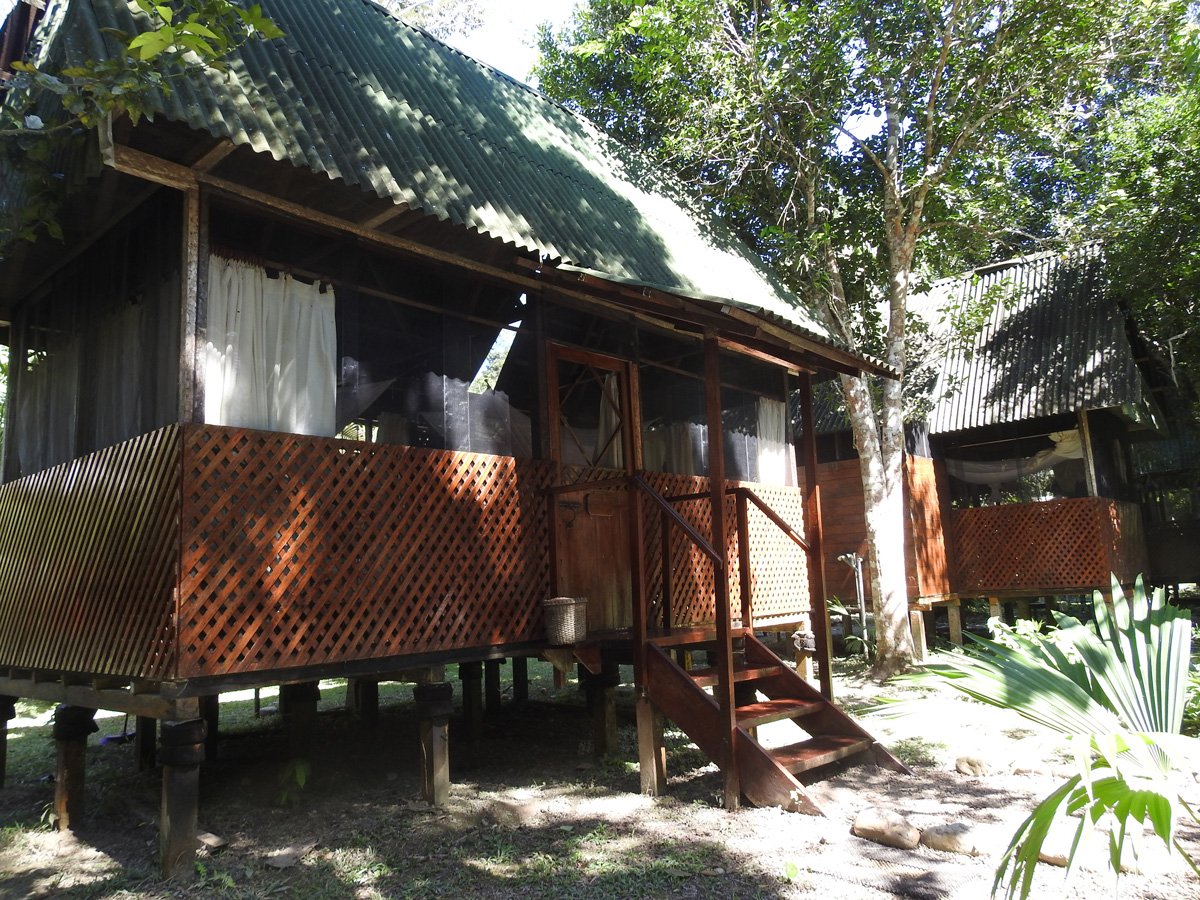
After a boat journey of approximately 6 hours, we arrive at Manu Wildlife Center, one of the world’s top ten wildlife lodges. After a reception and orientation, we move into our private bungalow and rest to escape the midday heat.
Later, we make our first acquaintance with the lowland rainforest, learning about the plants and forest ecology as we explore some of the 30 miles of trails that surround the lodge. We have an excellent chance of encountering some of the 12 species of monkeys, including the Spider Monkey and Emperor Tamarin, which inhabit the surrounding forest. (B/Box Lunch/D)
Day 4: Manu Wildlife Center: the Macaw Clay lick project, Canopy Tower & Tapir Clay lick.
Another early start (inevitable on wildlife expeditions), after a delicious breakfast we walk through the forest for some minutes, where we find the Macaw Lick project. The hide provided with individual chairs and a convenient place for cameras and binoculars to a distance of 15 meters. In groups of two and three the scarlet Macaws come flapping in, landing in the treetops as they eye the main stage below. After this we continue walking and exploring on the network of trails surrounding the lodge then we return to the lodge for lunch.
Later, we continue to explore and discover the rainforest, its lore and plant life, on the network of trails surrounding the lodge, arriving in the late afternoon at our 34m/112ft. Canopy Tower. On its platform we witness the frantic rush- hour activity of twilight in the rainforest canopy, before night closes in. Then we set off along the “collpa trail”, which will take us to the lodge’s famous Tapir Clay lick. Here at the most active tapir lick known in the entire Amazon, our research has identified from 8-12 individual 600-pound Tapirs who come to this lick to eat clay from under the tree roots around the edge. This unlikely snack absorbs and neutralizes toxins in the vegetarian diet of the Tapir, the largest land animal of Latin America. The lick features a roomy, elevated observation platform 5m/17ft above the forest floor. The platform is equipped with freshly made up mattresses with pillows. Each mattress is covered by a roomy mosquito net. The 10-m-long, elevated walkway to the platform is covered with sound-absorbing padding to prevent our footsteps from making noise. This Tapir experience is unique and exciting because these normally very shy creatures are visible up close, and flash photography is not just permitted, but encouraged. The hard part for modern city dwellers is to remain still and silent anywhere from 30 minutes to two or more hours. Many prefer to nap until the first Tapir arrives, at which point your guide gently awakens you to watch the Tapir 10-20m/33-66ft) away below the platform. Most people feel that the wait is well worth it in order to have such a high probability of observing the rare and elusive Tapir in its rainforest home. (B/L/D)
Day 5: Manu Wildlife Center: Hike to an Oxbow Lake and the Wildlife Trails.
We set off early for an old oxbow lake. As we circle the lake on our catamaran we might encounter the resident Giant Otter family on a fishing expedition, or troops of monkeys crashing noisily through the trees. Wattle Jacanas and dainty Sun Grebes paddle across the water, supple-necked Anhingas air-dry their wide, black wings, and perhaps an Osprey scans for fish from a high branch.
Among the bushes near the waterline, Hoatzins, which look like rust-colored, punk chickens, announce their presence with distinctive, bizarre wheezing and grunts. Woodpeckers, tanagers, macaws, toucans and parakeets all finally come swooping in to trees surrounding the lake. Many of them roost around the lake for the night. After lunch at the lodge our guide is available to lead us on freewheeling expeditions in search of further wildlife encounters, or we may take one of the lodge’s many trails on private and personal excursions to commune with the
spirits of the rainforest.
This evening, from the late afternoon until after Dinner, we offer an opportunity to search for caiman and other nocturnal life along the riverbank by boat (If the level of river allows it) (B/L/D)
Day 6: Manu Wildlife Center to Cusco or Lima – Departure day.
We leave our lodge very early on the two-hour and a half return boat trip downstream to the Colorado Village. Depending upon the time we must be in Puerto Maldonado, the breakfast will be served at the lodge or on the boat, of course this is a perfect time to take advantage of valuable early morning wildlife activity along the river, in addition this journey allows us to see several lowland native settlements and gold miners digging and panning gold along the banks of the Madre de Dios River. We will stop in the far-west type gold-mining town of Colorado to start our overland journey to Puerto Carlos for 45 minutes, then you will cross the Inambari River for 10 minutes’ boat trip to Santa Rosa, finally a van or bus will drive us in approximately two-hours and a half to the airport in Puerto Maldonado City, here you fly by a commercial airplane to Cusco or Lima, with this assistance your jungle adventure ends… (B)
Birdwatcher Photo Safari (8 Days / 7 Nights)
- From Cusco to Puerto Maldonado
- Wildlife highlights: 600+ bird species, tapirs, monkeys, otters
- Departure: Last Thursday of every month
- Duration: 8 Days / 7 Nights
Itinerary
Day 1 Cusco to Cock-of-the-Rock Lodge.
Our overland journey begins at 3,400m/11,150 ft, with an early departure from the highland city of Cusco. First we have a great reason to begin our day to observe Andean birds on a lagoon outside from Cusco city, and then we continue our journey to the lush cloud forest region where the Andes fall away to the Amazon basin. This is a day of scenic drama and striking contrasts. We first visit a mountain wetland habitat teeming with migrant and local waterfowl, before crossing two mountain ranges between the Cusco valley and the Paucartambo valley, to a maximum altitude of 3,900m/12,790ft. Finally, we follow a sinuous ribbon of highway on its plunge through an extraordinary world of forested cliffs, waterfalls and gorges. We take leisurely stops to see mountain villages, a hilltop necropolis of chullpas (pre-Inca burial chambers), and the abrupt ridge top of Ajanaco, which marks the final high point where the Andes begin their swoop into the Amazon basin. In the High part of Ajanaco we could watch Giant Hummingbird, Creamy-crested Spintail (an endemic specie), Chestnut- breasted Mountain-Finch, Scribble-tailed Canastero and by Pillahuata we could watch Chesnut-bellied Mountain Tanager, Band-tailed Fruiteater, Barred Fruiteater, Gray-breasted Mountain-Toucan. In clear weather we will see a breathtaking panorama of cloud forest and mountain giving way to the lowland rainforest plains far below us. Through the trail there are many places with bamboo patch and streams forming habitats for the mixed bird flocks, especially of Tanagers, barbets, and flycatchers.
After a box lunch we descend through the startling and rapid environmental transformations characteristic of the tropical Andes, passing from grassland and stunted trees through elfin forest, until we wind through a lush and magical world of overhanging trees, giant ferns, monster begonias, countless orchids and bromeliads, and a diverse and teeming birdlife.
We make frequent spontaneous stops, perhaps spotting a brilliantly feathered quetzal, a trogon, or the wild turkey-like Guan. We reach the comfortable Cock-of-the-Rock Lodge in the late afternoon, the best hour to visit the nearby viewing platform for the display ground, or “lek”. This is usually the highlight of a long, full day, a chance to see Peru’s dazzling national bird, the Cock-of-the-Rock (Rupicola peruvianus) in full, raucous courting display. (Box Lunch/D).
Day 2: Cock-of-the-Rock Lodge and Road up and trail system.
In the early morning we have a second chance to view the Cock-of-the-Rock display. This lek and its observation blind are famous among birders, since nowhere else on the planet allows so many of these spectacular blazing red birds to be seen so easily. (Note that the very best months for viewing Cocks-of-the-Rock are in September, October and November, although the males display throughout the year.) Afterwards we can stroll along the clearing formed by the nearby road, spotting other birds, and with luck some
Brown Capuchin or Woolly Monkeys.
Following a hearty breakfast, we begin our outing, a leisurely trip for wildlife spotting. In the afternoon we explore the riverside trail system near the lodge, enjoying the peace and seclusion of the cloud forest, with its profusion of plants and flowers, insects and butterflies, and a section of bamboo thickets. (B,L,D).
Day 3: Cock-of-the-Rock Lodge to Amazonia Lodge.
Rising early, we have a chance to scout more birds, and perhaps Brown Capuchin or Woolly monkeys along the nearby road. Or we can take a secluded nature walk on a short trail loop to the river and back. After breakfast we continue our drive, as mountains give way to low rolling hills and farmland. At Patria we visit a plantation of coca grown legitimately for the Peruvian coca leaf market.
At midday we reach Atalaya, a tiny port where the Piñipiñi River meets the Alto Madre de Dios. Now the lowland rainforest part of our journey begins.
Rivers are the highways of the rainforest, and henceforth we will travel in large, comfortable dugout canoes shaded by canopy roofs and driven by powerful outboard motors.
During normal river conditions we arrive at our lodge in time for exploration and wildlife viewing – which may include toucans, kingfishers, a rare endemic hummingbird and a multitude of butterflies — along one of its many forest trails. (B/Box Lunch/D).
Day 4: Amazonia Lodge.
In the early morning we star our birding activity in many different habitats like bamboo forest, flood plain area and hill forest.
This lodge has an excellent trail system to explore the rainforest and since this lodge is located at the pre-mountain zone, it allows us to spot different species of birds such as hummingbirds (Golden tailed sapphire, Sapphire Spangle Emerald, Rufus Crested Coquette, Violet Headed Hummingbird, Gould ́s jewelfront, Blue-Tailed Emerald, Fork-Tailed Woodnymph, Gray- Breasted Sabrewing, White Necked Jacobin, Koepcke ́s Hermit). This is a good place to increase your own birding list. (B,L,D).
Day 5: Amazonia Lodge to Manu Wildlife Center, Macaw Clay Lick Project and Canopy Tower.
There is time for another short morning hike on the lodge trails before leaving early for Manu Wildlife Center.
As we follow the broad, rushing course of the Alto Madre De Dios river past the last foothills of the Andes, our ever-changing route offers sightings of new birds — terns, cormorants, White-winged Swallows, and flocks of nighthawks flushed from their daytime lairs by the sound of our engine. Splashes of brilliant yellow, pink and red foliage dot the forest-clad slopes around us, and the breeze is laden with the heady perfumes of the tropical forest.
We pass the mouth of the Manu River, the gateway to the Manu National Park. We pause during our journey to stretch our legs and visit Boca Manu, the village a short way downriver. After a boat journey of approximately 6 hours, we arrive at Manu Wildlife Center, one of the world’s top ten wildlife lodges. After a reception and orientation, we move into our private bungalow and rest to escape the midday heat.
Later, in the afternoon we make our first acquaintance with the lowland rainforest, visiting the Macaw Lick project. We ́ll continue to explore and discover the rainforest, its lore and plant life, on the network of trails surrounding the lodge, arriving in the late afternoon at our 34m/112ft canopy tower. On its platform we witness the frantic rush-hour activity of twilight in the rainforest canopy, before night closes in. (B/Box Lunch/D).
Day 6: Manu Wildlife Center: Blanquillo Clay Lick, the Wildlife Trails and Tapir Clay lick.
Another early start (inevitable on wildlife expeditions) is followed by a short boat ride downstream. We take a 20-minute trail through palm plantations to a cut-off channel of the river, where we find the Macaw Lick. A spacious hide provided with individual chairs and a convenient
place for cameras and binoculars is our ringside seat for what is usually a very spectacular show. We enjoy a full breakfast here while waiting for the main actors to arrive.
In groups of twos and threes the big Red-and-Green Macaws come flapping in, landing in the treetops as they eye the main stage below – the eroded clay banks of the old channel. Meanwhile the supporting cast appears: these may include Blue-headed, Mealy, Yellow-crowned, and Orange-cheeked Parrots — and the occasional villain, a menacing and unwelcome Great Black Hawk.
The drama plays out in first in tentative and then bolder approaches to the lick, until finally nearly all the macaws, parrots, and parakeets form a colorful and noisy spectacle on the bare banks, squabbling as they scrape clay from the hard surface. (Please note that the clay lick is most active from August to October and less so during the months of May and June.) After lunch at the lodge our guide is available to lead us on freewheeling expeditions in search of further wildlife encounters, or we may take one of the lodge’s many trails to commune with the spirits of the rainforest.
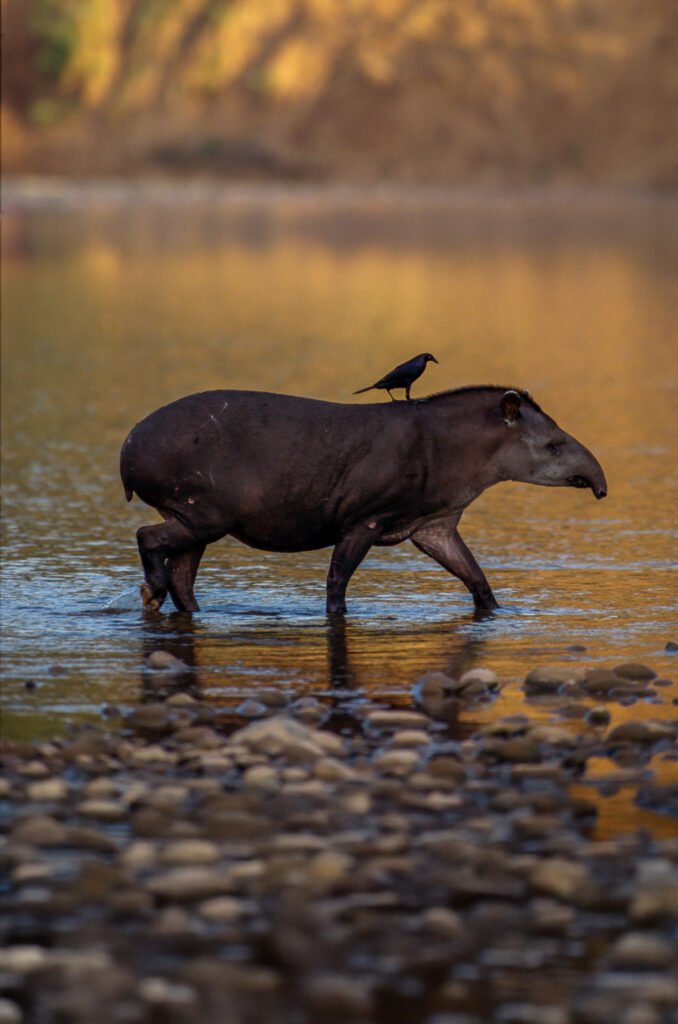
Then we set off along the “collpa trail”, which will take us to the lodge’s famous Tapir Clay lick. Here at the most active tapir lick known in the entire Amazon, our research has identified from 8-12 individual 600-pound Tapirs who come to this lick to eat clay from under the tree roots around the edge.
This unlikely snack absorbs and neutralizes toxins in the vegetarian diet of the Tapir, the largest land animal of Latin America. The lick features a roomy, elevated observation platform 5m/17ft above the forest floor. The platform is equipped with freshly-made-up mattresses with pillows. Each mattress is covered by a roomy mosquito net. The 10-m-long, elevated walkway to the platform is covered with sound-absorbing padding to prevent
our footsteps from making noise. This Tapir Experience is unique and exciting because these normally very shy creatures are visible up close, and flash
photography is not just permitted, but encouraged. The hard part for modern city dwellers is to remain still and silent anywhere from 30 minutes to two or more hours. Many prefer to nap until the first Tapir arrives, at which point your guide gently awakens you to watch the Tapir 10-20m/33-66ft) away below the platform. Most people feel that the wait is well worth it in order to have such a high probability of observing the rare and elusive Tapir in its rainforest home. (B/L/D)
Day 7: Manu Wildlife Center: Hike to one Oxbow Lake.
After a delicious breakfast we set off for an oxbow lake full of water lilies and sunken logs. As we circle the lake on our catamaran we might encounter the resident Giant Otter family on a fishing expedition, or troops of monkeys crashing noisily through the trees. Wattle Jacanas step lightly on the lily pads, dainty Sun Grebes paddle across the water, supple-necked Anhinga’s air-dry their wide,
black wings, and perhaps an Osprey scans for fish from a high branch.
Among the bushes near the waterline, Hoatzins, which look like rust colored, punk chickens, announce their presence with distinctive, bizarre wheezing and grunts. Woodpeckers, tanagers, macaws, toucans, and parakeets all finally come swooping in to trees surrounding the lake. Many of them roost around the lake for the night. Then we return to the lodge for lunch.
After lunch we must take our motorized boat to head the bamboo forest, here we will find some birds such us Peruvian Recurvebill, Manu Antbird, Brown-Rumped Foliage Gleaner, Rufous-Fronted Antthrush, and others bamboo specialist.
This evening, from the late afternoon until after Dinner, we offer an opportunity to search for caiman and other nocturnal life along the riverbank by boat (If the level of river allows it). (B/L/D)
Day 8: Manu Wildlife Center to Cusco or Lima – Departure day.
We leave our lodge very early on the two-hour and a half return boat trip downstream to the Colorado Village. Depending upon the time we must be in Puerto Maldonado, the breakfast will be served at the lodge or on the boat, of course this is a perfect time to take advantage of valuable early morning wildlife activity along the river, in addition this journey allows us to see several lowland native settlements and gold miners digging and panning gold along the banks of the Madre de Dios River. We will stop in the far-west type gold-mining town of Colorado to start our overland journey to Puerto Carlos for 45 minutes, then you will cross the Inambari River for 10 minutes’ boat trip to Santa Rosa, finally a van or bus will drive us in approximately two- hours and a half to the airport in Puerto Maldonado City, here you fly by a commercial airplane to Cusco or Lima, with this assistance your jungle adventure ends… (B)
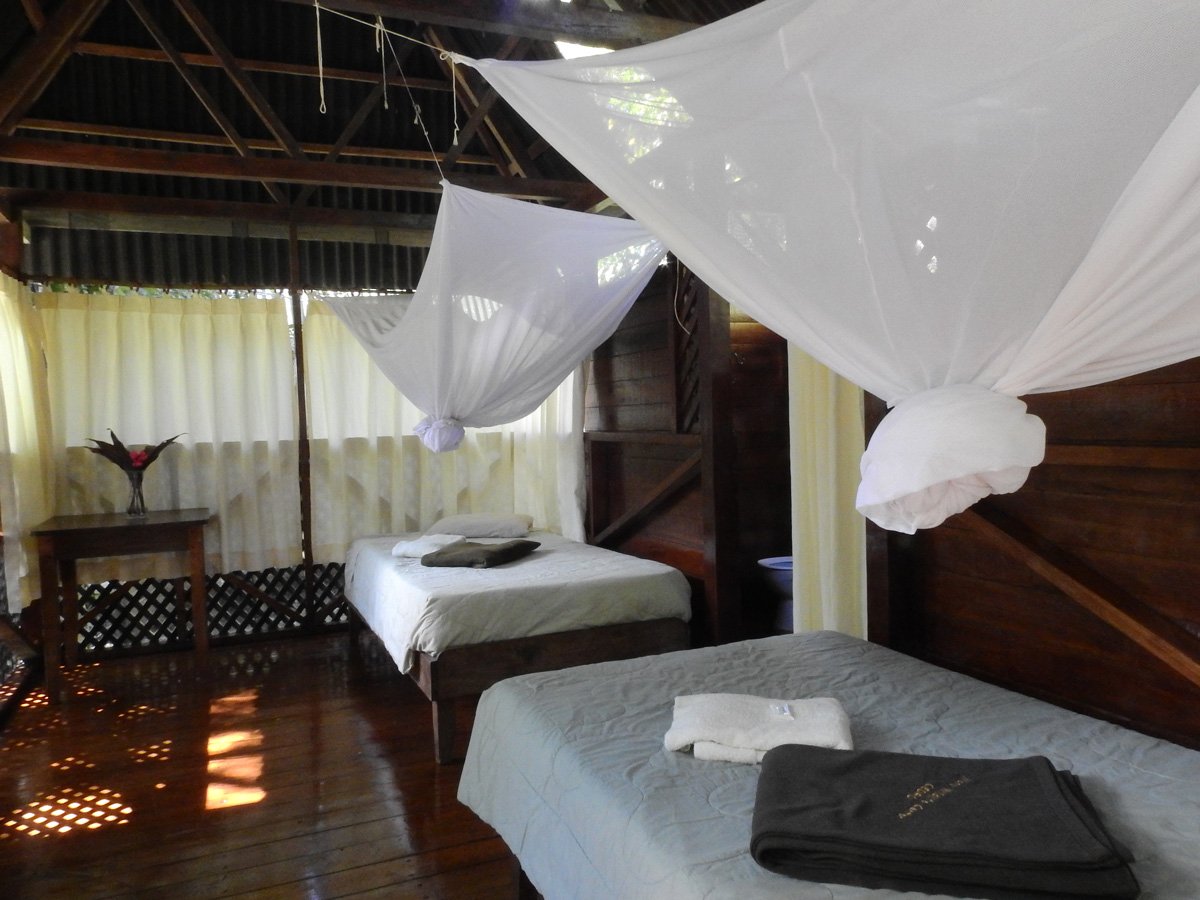
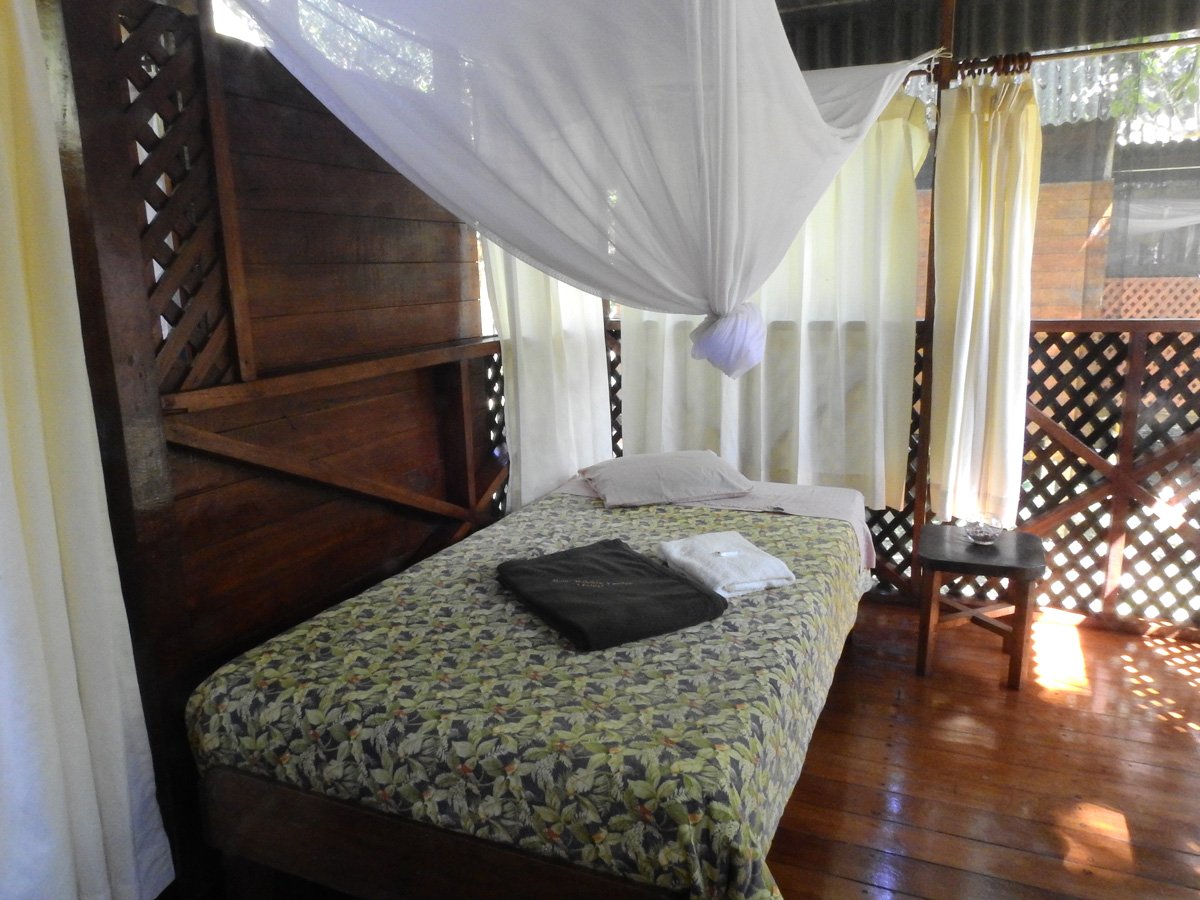
Rooms